Snowplow Damage to Your Lawn: What to Do (and What to Avoid)
We’re slowly approaching the time of year when all the snow melts and suddenly the lawn looks like it lost a fight with a truck.
What looked fine all winter now shows ripped-up grass, soil shoved where it doesn’t belong, and messy edges along driveways and walkways. For homeowners and property managers across Grand Rapids, this moment is all too familiar.
The good news is this: most snowplow damage looks worse than it actually is. In many cases, it’s repairable, manageable, and even preventable. With the right approach and a little patience, spring recovery doesn’t have to be an ongoing problem.
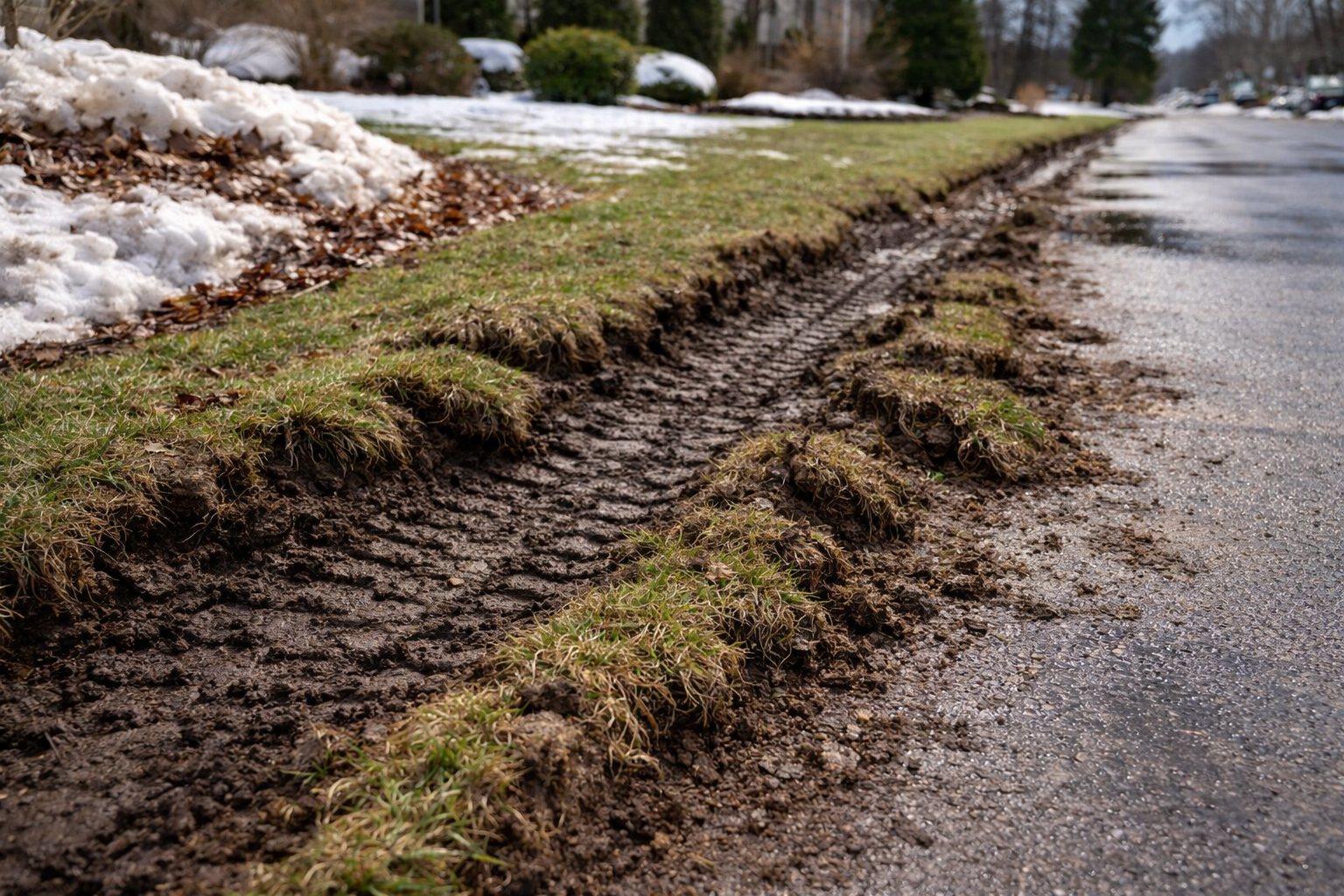
Snowplow damage is a common part of winter, but with the right timing and approach your lawn can recover cleanly.
Common Snowplow Damage (and What to Avoid Doing About It)
As snow clears, damage can show up in a few different ways. Some issues are simply cosmetic while others need attention, but timing and approach matter.
⚠️ Torn or Displaced Sod
This is one of the most common issues, especially along edges and turnarounds. Grass may be peeled back or pulled out of place where plows had passed repeatedly.
🛠️ What to do:
Allow the ground to thaw and dry before touching it. In many cases, the lawn can be reset or repaired once conditions support root recovery.
❌ What not to do:
Don’t rake, roll, or press grass back into place while the ground is frozen or saturated. This often causes more root damage and slows recovery.
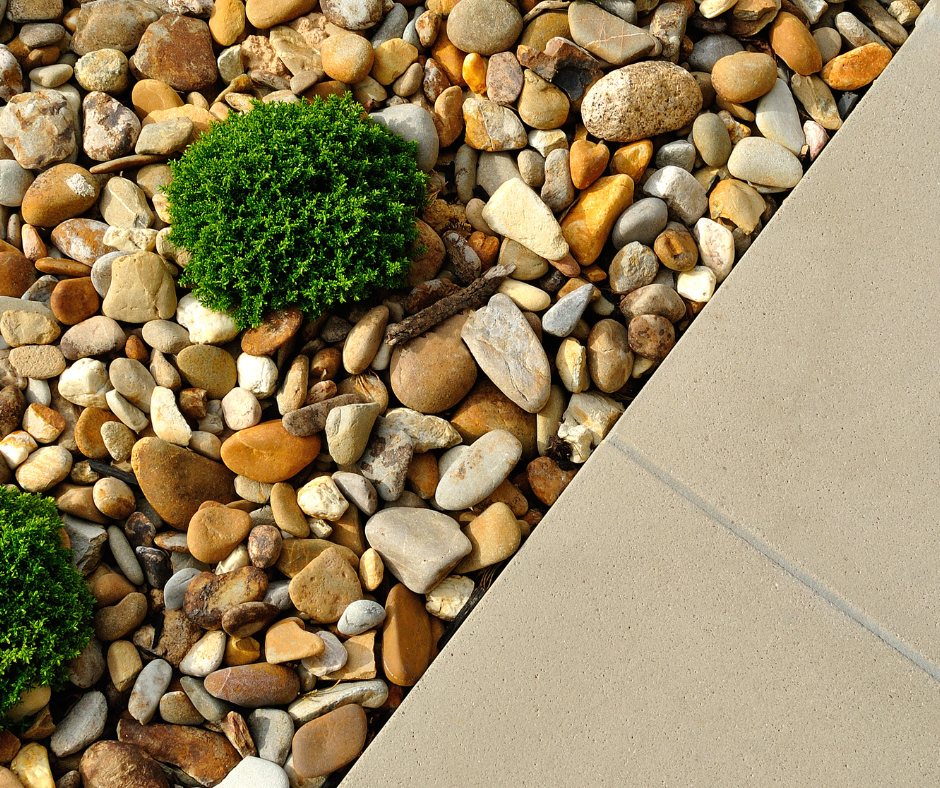
⚠️ Cracked Concrete
Freeze-thaw cycles combined with plow pressure can cause slabs or pavers to shift, crack, or settle unevenly.
🛠️ What to do:
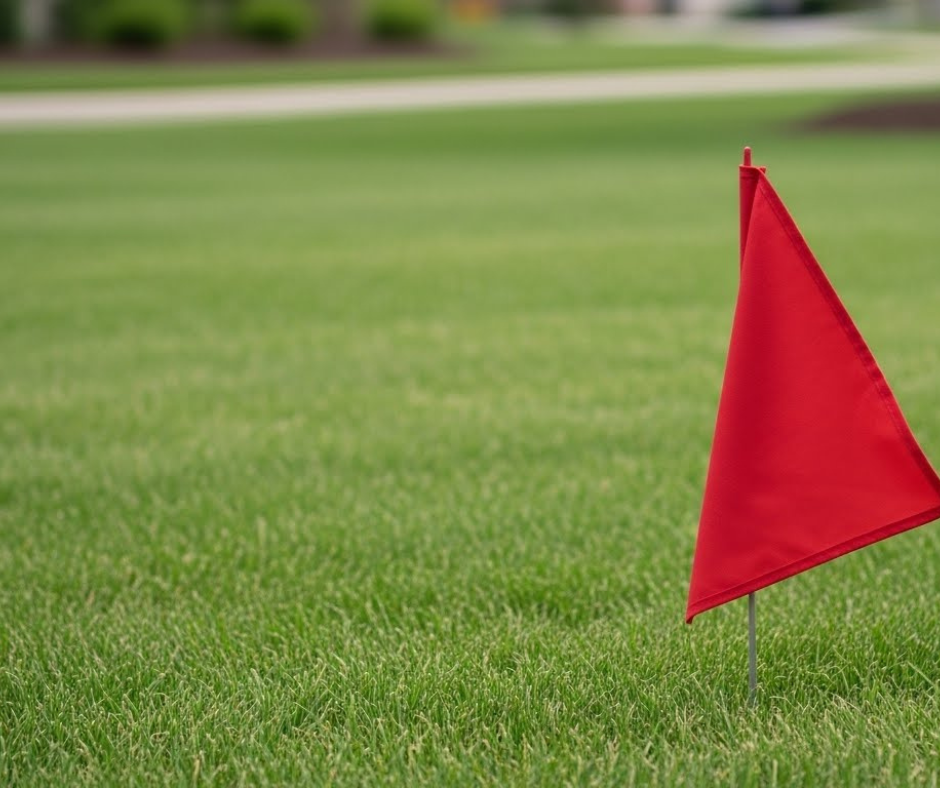
Flag uneven areas once snow clears and reassess after the ground fully thaws. Some movement stabilizes naturally, while other areas benefit from targeted repairs.
❌ What not to do:
Don’t grind, patch, or reset hard surfaces before the underlying soil is evaluated. Surface repairs done too early often don’t last.
⚠️ Salt Burn
Salt buildup can thin grass, cause discoloration, and slow healthy lawn growth along hard surfaces.
🛠️ What to do:
Flush any affected areas and assess health once growth begins. Some areas can recover naturally with regular care.
❌ What not to do:
Don’t assume spring rain will fix salt damage on its own. Repeated exposure often requires targeted treatments.
⚠️ Drainage Issues
Melting snow can expose low spots, pooling, or runoff patterns that weren’t visible during winter.
🛠️ What to do:
Observe how water moves during thaw cycles and early spring rains. Proper grading and soil adjustments can prevent long-term turf damage.
❌ What not to do:
Don’t ignore standing water or assume it will resolve on its own. Ongoing saturation weakens grass and compacts soil.
Most snowplow damage is manageable, but timing matters. The goal is not to rush repairs and address any issues at the right point in the season so the landscape can make a full recovery.
How to Prevent Plow Damage Next Winter
While some winter damage is unavoidable, planning ahead can significantly reduce repeat issues. These proactive steps will help protect your lawn:
- Clearly mark lawn edges and beds so plow operators can see boundaries under snow.
- Plan snow placement intentionally to avoid repeated piling that causes stress on grass and soil.
- Review damage patterns from this winter and adjust layouts or practices before next season.
- Upgrade edging or transition areas where lawn meets pavement to withstand plow pressure.
When to Call a Professional for Winter Lawn Damage
Once damage goes beyond surface issues or when timing and safety are involved, it’s usually best to best in the pros. The difference isn’t just tools or equipment, but knowing what to address first and what can wait.
Fixing winter damage the right way follows a clear sequence. At CAMP Landscape, we follow a proven, step-by-step process to repair winter damage effectively and prevent repeat issues.
✔️ Start with an on-site assessment once the ground has thawed
✔️ Fix soil, drainage, and base issues first
✔️ Repair damaged grass and reset edges where needed
✔️ Treat salt-stressed areas to support healthy recovery
✔️ Monitor progress and make adjustments as needed
When repairs are done at the right time and in the right order, lawns recover faster and hold up better year after year.
Damage Happens. The Right Response Makes the Difference.
Snowplow damage is part of winter, but long-term landscape problems don’t have to be. Most damage looks worse than it is, but with the right timing and approach, recovery can be straightforward and effective.
The key is knowing what can wait, what needs attention, and when professional support makes sense. Rushing fixes too early often leads to repeat issues, while a measured approach helps your lawn make a full recovery.
If you’re unsure what areas need attention, professional guidance can take the guesswork out of the process. With a clear plan and the right care, your landscape can bounce back cleanly and stay low-maintenance long after winter fades.
🔍 Schedule a spring repair assessment with CAMP Landscape today.