Irrigation Shutdown Mistakes That Can Cost You Thousands
Most homeowners figure that turning off the water to their irrigation system is enough. It feels logical. The water is off, so nothing should freeze. But shutting off the supply valve still leaves water sitting inside every underground pipe, fitting, and sprinkler head on your property. When temperatures drop below freezing, that water expands, and the damage adds up fast.
At CAMP, we handle fall irrigation shutdowns for homeowners and property managers all over the Grand Rapids area, and we see the same avoidable failures every year. The fix comes down to a thorough, correctly timed shutdown that clears every zone and protects the parts most likely to freeze.
Skipping even one step in the shutdown process can leave enough water in your lines to crack pipes and heads before winter is over. Here is what the most common and most costly irrigation shutdown mistakes look like, and how to avoid them before West Michigan weather makes the decision for you.
In West Michigan, the right plant in the right spot is
the key to a landscape that lasts.
Turning Off the Water Is Not the Same as Winterizing Your System
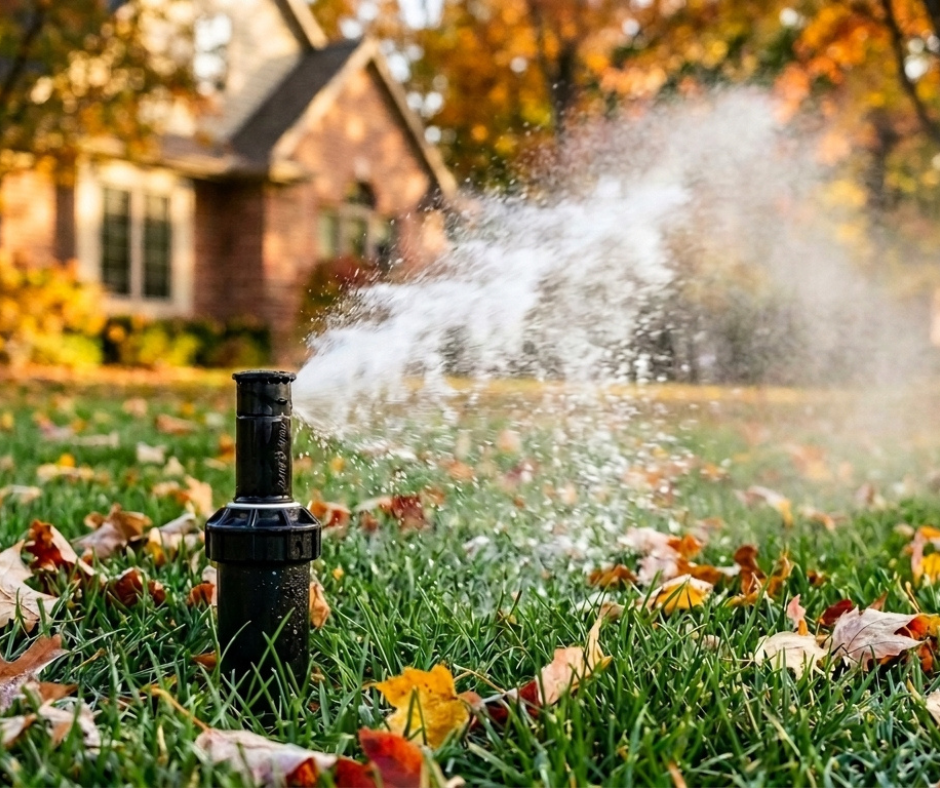
Closing the main supply valve stops new water from entering your system. It does not remove the water already inside. Underground pipes hold more water than most people expect, and it stays there until it is actively removed. There are three accepted methods for draining an irrigation system.- 💧 Manual drainage uses valves at low points in the system to release water by gravity. It’s simple and low-cost, but won’t clear every last bit of water from the lines.
- 💧 Automatic drainage relies on special valves built to open on their own the moment water pressure drops, though these require the right system design to work correctly.
- 💧 Compressed air blowout is the most thorough method and the most commonly recommended. A professional uses compressed air to push water out of each zone individually until the lines are clear.
The First Frost Is Too Late
West Michigan winters do not follow a predictable schedule. A hard freeze can arrive in October with very little warning, and once the ground temperature drops fast enough, the damage happens quickly. Many homeowners plan to schedule their irrigation shutdown but keep pushing it back. By the time a frost warning appears on the forecast, irrigation companies are often fully booked. At CAMP, we see this every fall without fail. Scheduling your shutdown in mid-fall, before the cold weather becomes urgent, gives you a real buffer. For property managers overseeing multiple sites, that lead time matters even more. Getting on the schedule early is one of the simplest ways to avoid a problem that is completely preventable.Components Most Likely to Freeze First
Some parts of your irrigation system are more exposed than others, and those are the ones that tend to fail first when the shutdown is incomplete or delayed.- ⚙️ Backflow preventers are often installed above ground, which makes them vulnerable to cold air even before the ground freezes. They are also among the more expensive components to replace, and they are required by code in most municipalities.
- ⚙️ Above-ground pipes and fittings face the same exposure. Any section of pipe that is not buried has almost no insulation from outside temperatures.
- ⚙️ Valve boxes and manifolds sit just below the surface and can freeze if water is left inside them. Damage here can affect how entire zones operate when the system restarts.