After the Snow Melts: Your Guide to Spring Landscape Repairs
All winter long, your property seems to be holding up just fine. Everything feels protected under a clean white layer. Then the spring thaw hits West Michigan.
Suddenly there are muddy ruts, thinning grass, low spots holding water, and shrubs that don’t look as healthy as they did in the fall. For many homeowners and property managers, it feels like winter did more damage than expected.
Here’s the truth: winter didn’t ruin your landscape. Snow and ice act like a stress test exposing weak drainage, compacted soil, and vulnerable edges. The good news is that with the right timing and priorities, most early spring landscape issues are manageable.
At CAMP, our approach to spring landscape repair in Grand Rapids is simple: identify what matters most, address safety and structural concerns, then set lawn and planting beds up for a strong recovery. In this guide, we’ll walk through what winter typically reveals and what to fix first to protect your property’s long-term value.
When the snow clears, the real condition of your landscape comes into focus. Prioritize the right repairs and set your property up for a healthy spring recovery.
🌱 Lawn & Edge Damage
After the snow melts, lawn edges are usually the first place weakness shows up. Torn grass from plows, salt-burned strips along sidewalks, and compacted soil in high-traffic areas are common problems after a long winter.
This winter lawn damage should be your top priority, not because it looks the worst, but because it spreads the fastest. If you ignore or rush repairs before conditions are right, you can create an even bigger problem than what you started with.
🛠️ What to Fix First
- Check soil moisture before any spring lawn repair to avoid working with saturated or frozen ground.
- Repair and re-grade vulnerable edges once soil can support recovery.
- Loosen compacted areas before seeding.
- Patch or overseed early to strengthen thin turf.
- Reinforce high-traffic edges to prevent repeated damage.
💧Drainage & Grading Problems
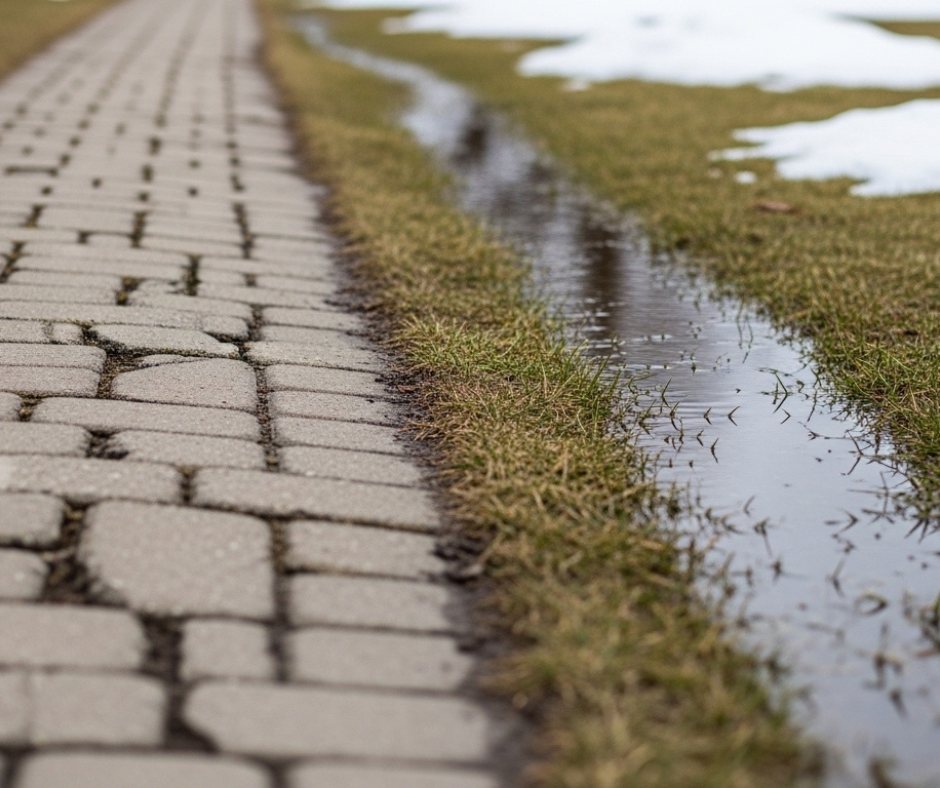
When the ground thaws, pay attention to where water flows and where it sits. If puddles are still sitting a day or two after wet conditions, or certain areas stay muddy after the rest of the lawn dries, that is not just “normal spring mess.” This is a sign of grading or drainage issues.
Across Grand Rapids, poor spring drainage often leads to turf decline, root stress, and long-term landscape instability. In more serious cases, erosion near foundations or walkways can create structural or liability concerns. Drainage problems do not correct themselves and only get worse over time.
🛠️ What to Fix First
- Observe water patterns after snowmelt or rain and look for consistent low spots.
- Correct minor grading issues early while the soil is workable.
- Repair erosion near foundations and walkways promptly!
- Plan for long-term drainage solutions if pooling is recurring.
🧱 Hardscape & Safety Concerns
Freeze-thaw cycles are tough on hardscapes in Michigan. Spring is when that stress becomes visible. Shifted pavers, cracked edges, and uneven walkways are common after a hard winter.
These are not just cosmetic flaws, they are safety risks and hardscape issues rarely stay small. The longer they sit, the more movement spreads and the more unstable the surface becomes.
🛠️ What to Fix First
- Walk the property and identify any trip hazards.
- Re-set loose pavers or edging stones.
- Repair cracked sections before further separation spreads.
- Reinforce high-use areas with proper base support.
Reset Your Property the Right Way
Early spring landscape cleanup is not just about fresh mulch and green grass. It’s about correcting what winter revealed before small issues turn into expensive repairs.
The mistake is not the damage itself, it’s delaying action or guessing a solution.
Start with lawn edges because they spread quickly. Address drainage issues because unmanaged water always wins. Fix hardscape movement early because safety and stability matter more than surface appearance. When handled early and properly, most winter landscape damage is manageable.If you want a clear plan instead of guessing your way through repairs, start planning your spring refresh now. A focused seasonal walkthrough can turn winter surprises into a smart, confident start to the spring season 👍
Other Posts You May Like